
Walk-In Shoe Storage Rooms in Dubai: Designing a Dedicated Shoe Wall or Closet
A shoe storage room in Dubai is a dedicated, climate-aware space — a full shoe wall or compact walk-in — that keeps every pair visible, supported, and protected from the conditions that quietly ruin footwear in the Gulf: summer air that pushes past 40°C and coastal humidity that climbs toward 90% at dawn, a combination that moulds leather and softens shoe adhesives. It’s a far more deliberate solution than the rack by the front door or the tower of shoeboxes most homes rely on, and it’s built around the way shoes are actually sized, displayed, and cared for.
This is the part of a wardrobe most people under-plan. A general walk-in closet or dressing room will mention shoes in passing, but a serious collection needs its own logic: the right shelf pitch, the right protection, and a layout that turns a growing pile into a boutique-style display you can actually shop from. It’s the kind of specialised zone ClosetWorld has been engineering into UAE homes for years.
Updated for 2026.
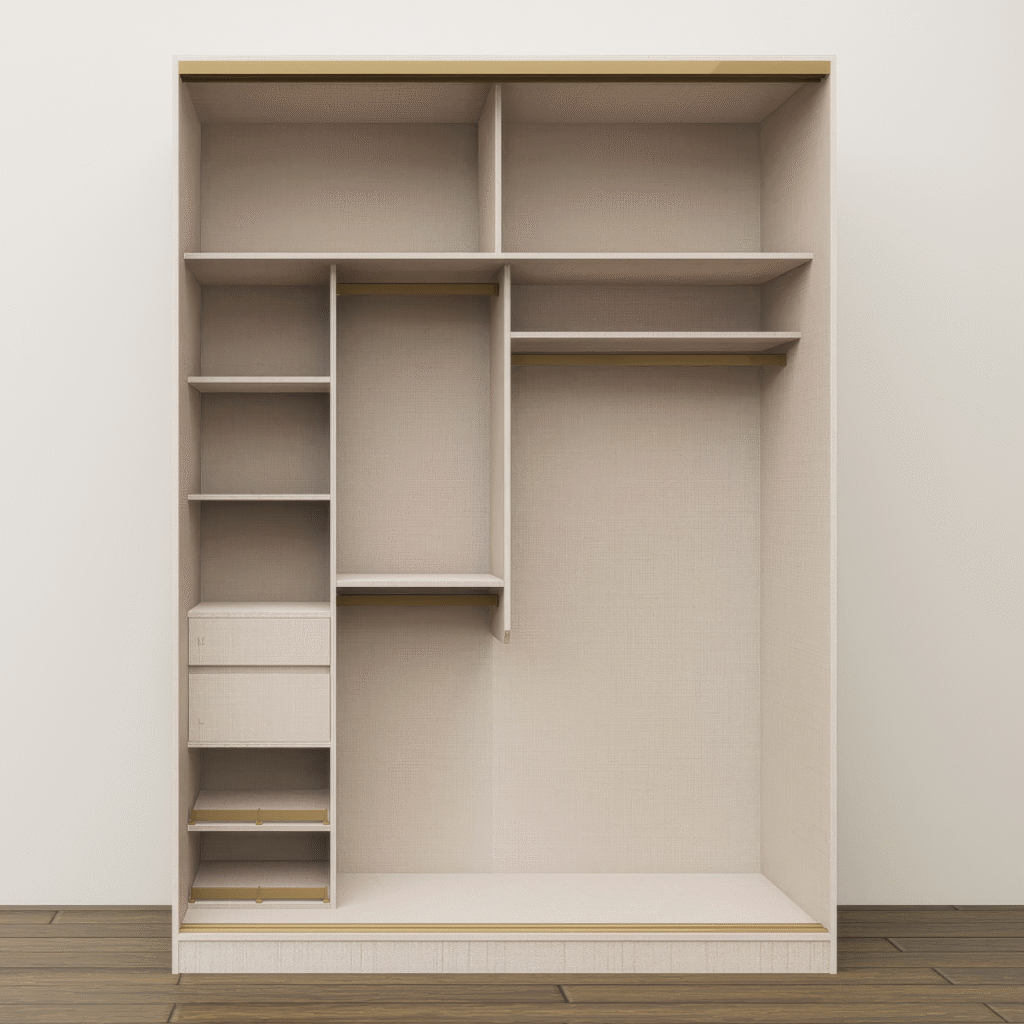
Why shoes deserve dedicated storage
Footwear collections grow faster than almost anything else in a home, and in the UAE they grow in several directions at once — formal heels and abayas-appropriate flats, men’s formal and traditional footwear, sandals for the heat, sports shoes, and children’s sizes that change every season. Storing all of that well is a specific problem:
Visibility. Shoes hidden in closed boxes are forgotten and unworn. A good shoe room makes the whole collection visible at a glance, the way a boutique displays stock.
Support and shape. Heels, boots, and leather shoes lose their form when piled. Each pair needs the right depth and the right shelf angle to sit properly.
Capacity that scales. A collection that doubles over a few years needs adjustable, expandable storage — not a fixed rack that’s full on day one.
Protection. This is the part unique to the Gulf, and it’s where most storage fails.
Protecting footwear from the UAE climate
The same heat and humidity that challenge stored clothing are even harder on shoes, because leather, suede, and adhesives all react to the local climate. We design shoe storage around three realities — the same climate thinking behind our humidity-resistant closet construction:
Humidity and mould. Summer humidity above 80% encourages mould on leather and inside enclosed shoes. Ventilated shelving, airflow gaps, and cedar or silica inserts keep footwear dry between wears.
Heat and warping. Shoes stored in hot, unconditioned spaces — garages, balconies, sealed boxes in the sun — warp and the glue degrades. A shoe room inside the conditioned envelope of the home protects them.
Dust and odour. Fine dust settles on open shoes fast, while sealed storage traps odour. The fix is balanced: ventilated but protected, with airflow designed in rather than shut out.
The right balance between open display and protection is the central design decision, and it’s worth getting right before choosing finishes.
Open display vs concealed storage
Most shoe rooms combine both, but knowing the trade-off helps you weight the design toward your collection.
| Storage method | Visibility | Protection | Capacity | Best for |
|---|---|---|---|---|
| Open angled shelves | Excellent | Low (dust) | High | Frequently-worn pairs, sandals, sneakers |
| Closed cubbies / drawers | Low | High | Medium | Seasonal or rarely-worn pairs |
| Pull-out shoe racks | Good | Medium | High (deep walls) | Maximising a deep or narrow wall |
| Glass-front lit display | Excellent | High | Medium | Designer pairs and collections worth showcasing |
A typical design we deliver mixes open angled shelving for daily pairs, pull-out racks to exploit depth, and a glass-front, lit section for the pieces worth showing off, finished with LED lighting so colours and materials look true.
Getting the dimensions right
Good shoe storage is a numbers exercise, and getting the measurements right is what separates a custom shoe room from an off-the-shelf rack:
Width per pair: allow roughly 15–20 cm per pair, more for wide men’s shoes.
Shelf depth: 30–35 cm suits most footwear; deeper for boots stored upright.
Shelf pitch: adjustable shelves are essential — flats need only ~12 cm of height, ankle boots far more, and tall boots need a dedicated full-height section.
Angle for visibility: angled (pitched) shelves display shoes face-out so the collection reads like a shop, while flat shelves maximise raw capacity.
Because every collection is a different mix of heels, sneakers, sandals, and boots, we size each zone to what you actually own rather than to a generic grid. That same made-to-measure approach is what we bring to a full dressing room design — the shoe wall is simply one specialised zone within it.
Designing the shoe room as an experience
A dedicated shoe space is also one of the most rewarding parts of a home to design well. Beyond the shelving, the details turn it from storage into a room you enjoy using:
A seat or bench to sit and change comfortably.
A full-length mirror to check the whole look.
Soft, even lighting that flatters materials and avoids harsh shadows.
Soft-close drawers and doors so nothing slams on a glass-front display.
A landing surface for the day’s chosen pair, or for accessories — though watches and fine jewellery belong in a dedicated jewellery drawer system rather than on a shoe shelf.
For larger homes, the shoe room becomes a boutique within the dressing area — one specialised zone of a full apartment, villa, or high-rise walk-in build. For apartments, the same principles compress into a single well-engineered shoe wall.
A representative project
Treat the sketch below as typical rather than literal; it draws on patterns we see again and again across Dubai footwear projects and does not refer to any specific customer:
Project: Downtown Dubai apartment. A couple with a 90-pair collection had shoes spread across three rooms in boxes. We converted a 2.4-metre wall into a dedicated shoe storage zone: angled open shelves for everyday pairs, full-height pull-out racks for boots, a glass-front lit cabinet for designer pieces, and a bench beneath a mirror. Ventilation gaps and cedar inserts addressed the summer-humidity mould the client had battled for years. Every pair is now visible and dry.
Where a shoe room works best in the home
Footwear is stored in two very different modes, and the best homes plan for both. Everyday pairs belong near the entrance — a ventilated shoe cabinet or bench at the door keeps the pairs you reach for daily off the floor and the imported dust out of the rest of the home. The main collection belongs in or beside the dressing area, where it can be displayed, climate-protected, and shopped from at leisure.
Splitting storage this way solves a common frustration: a single rack by the door that’s permanently overflowing while the rest of the collection sits forgotten in boxes. With a small entry cabinet handling daily turnover and a proper shoe wall housing the collection, both work better. In a villa, the collection naturally lives within a dedicated dressing room; in an apartment, a single engineered wall does the job.
Not sure which split suits your floor plan? Get your personalized storage assessment and our consultant will map both zones around how your household actually comes and goes.
How we design a shoe storage room
We start by counting and categorising the collection — how many everyday versus occasion pairs, how many boots, the split between leather, suede, and synthetic — because that inventory dictates shelf pitch, ventilation, and the ratio of open to closed storage. We then visualise the design in 3D before building, so you can see the boutique effect before committing.
Our process page walks through that consultation-to-installation journey, while the wider range lives on our products page or in our walk-in closet collection. 14+ years our team has produced and installed storage across the UAE — 3,000+ projects to date — building shoe walls for city apartments and whole dressing rooms alike.
Ready to give your shoes the room they deserve? Claim your free design consultation, call 800 29029, or visit our Sharjah or Dubai showrooms to see display and pull-out options in person.
Frequently asked questions
How much space do I need for a shoe storage room?
How do I stop leather shoes from getting mouldy in Dubai?
Should shoes be stored on open shelves or behind doors?
What's the best shelf height for shoes?
Can you display shoes like a boutique?
Can a shoe storage room fit in an apartment?
Can a shoe storage room fit in an apartment?
How many pairs can a custom shoe wall hold?
Related Reading at ClosetWorld
Full walk-in closet design where the shoe wall is one zone — the bigger room a shoe wall usually lives inside
Dressing-room layouts that integrate footwear — combining shoes, clothing, and accessories in one space
Climate-aware construction that keeps leather dry — the ventilation and materials behind mould-free footwear storage
Display-grade LED lighting for cabinets — so leathers and colours read true behind glass
Mirror-equipped vanity and grooming units — the finishing touch for a shoe-and-dressing area
Dedicated jewellery and watch drawers — for the accessories that don’t belong on a shoe shelf
Walk-in closet product range — the conversion-ready product behind a boutique shoe room
Dubai walk-in builds for apartments, villas, and high-rises — the Dubai pillar a shoe zone is specified within
Written by Ahmad Hassan. As a ClosetWorld Senior Design Consultant for 15+ years, he has planned wardrobes and shoe walls throughout the UAE and Oman; this page was updated in 2026. To build a shoe room around your collection, start your closet transformation, explore the team behind ClosetWorld, or ring 800 29029.