
Majlis Storage Solutions in the UAE: Designing Storage for the Family Majlis
Majlis storage in the UAE is about keeping a formal reception room immaculate and ready to host at a moment’s notice — concealing floor cushions and bedding when they’re not in use, giving the bukhoor, the serving sets, and guest provisions a proper home, and doing all of it without cluttering a room whose whole purpose is hospitality. This is no ordinary room: UNESCO inscribed the majlis on its Representative List of the Intangible Cultural Heritage of Humanity in 2015, in a joint nomination by the UAE, Saudi Arabia, Oman, and Qatar. ClosetWorld designs built-in storage tailored to how Gulf families actually use the majlis, from traditional floor-seating rooms to contemporary lounges.
It’s a distinct brief from a bedroom or a general lounge. A full bedroom solution is about daily living, and the entertainment-area product is about media and seating — but the majlis carries a layer neither does: the rituals of receiving guests, where karam (generosity) shows in a room that always looks ready.
Updated for 2026.
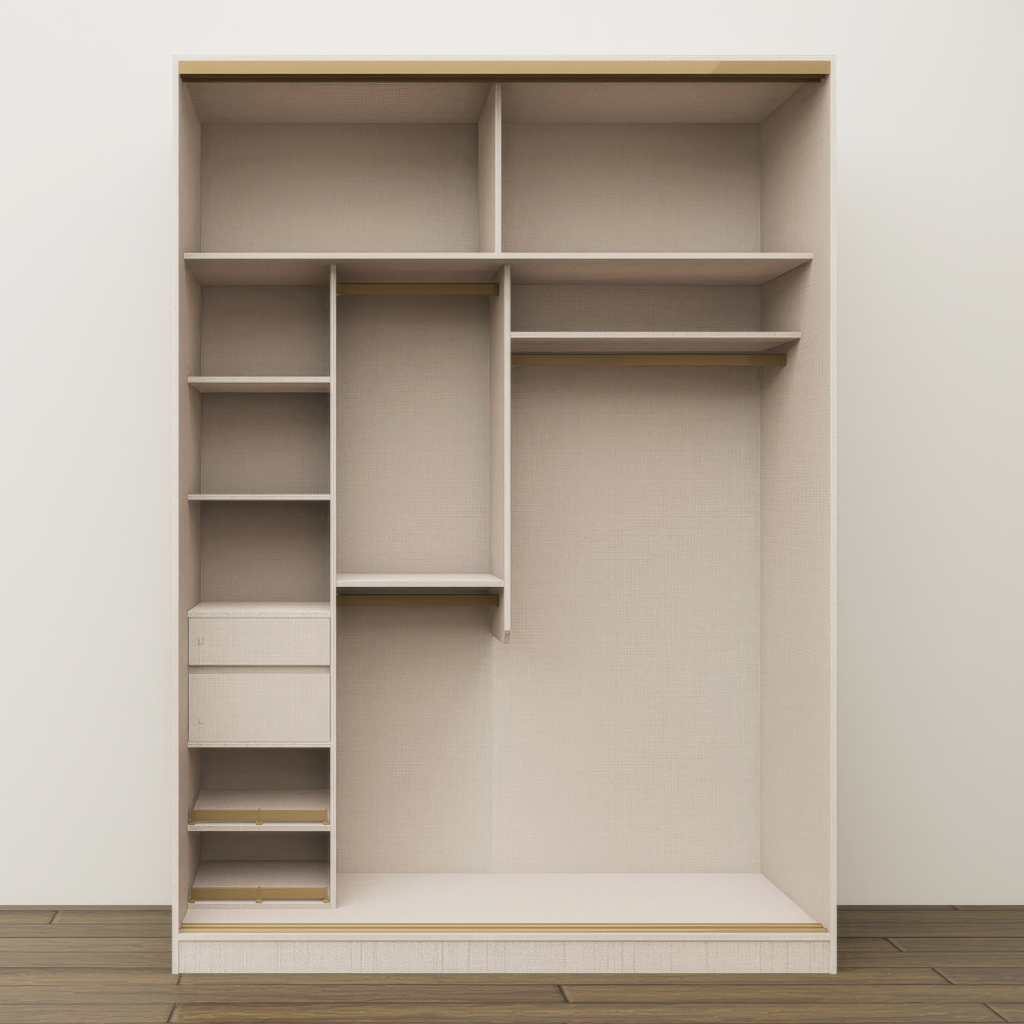
The majlis: a room built around hospitality
In Gulf homes the majlis is the formal space for receiving guests, and it often follows its own rules. Many homes keep a separate men’s and women’s majlis; many still use traditional floor seating — cushions, bolsters (masnad), and floor mattresses (mafrash) — alongside or instead of sofas. And almost all are governed by one expectation: the room must look pristine and be ready to host, sometimes with little notice.
That creates storage needs no ordinary living-room cabinet addresses:
Reconfigurable seating that has to be stored away when the room changes use or when extra guests need floor space.
Bukhoor and oud rituals that scent the room and need their own ventilated home.
Serving sets — the dallah, finjan cups, incense burners, and date dishes — that are both used often and worth displaying.
Guest provisions — spare shawls or abayas, prayer mats and Qurans, and somewhere for guests’ shoes at the entrance.
Designing the majlis well means giving each of these a dedicated place so the room itself stays uncluttered and welcoming.
Concealed seating and bedding storage
The biggest practical challenge in a traditional or hybrid majlis is the seating itself. Floor cushions, bolsters, and mafrash are bulky, used seasonally or for larger gatherings, and unsightly when piled in a corner. We solve this with concealed storage built into the room’s architecture:
Bench and banquette seating with lift-up or drawer storage underneath — turning the seating itself into the store for spare cushions and bedding.
Full-height cupboards with deep shelving for stacked mafrash and bolsters, finished to match the room so they read as joinery, not storage.
Pull-out and soft-close mechanisms (soft-close hardware) so heavy bedding moves easily and nothing slams.
The principle is the one we apply to awkward-volume storage across the home — recovering space that’s otherwise wasted, much like our approach to under-stairs storage — but tuned to the dimensions of majlis bedding.
Display and heritage niches
Where cushions are concealed, the majlis’s beautiful objects should be shown. A well-designed wall unit balances closed storage with lit display niches for the pieces that express the household’s taste and heritage:
The dallah and serving sets, displayed on lit shelves rather than hidden in a kitchen cupboard.
A ventilated bukhoor and oud niche — incense and oud oils need airflow so the scent stays fresh and doesn’t permeate stored fabrics, the same ventilation thinking we bring to garment storage.
Heritage and gifted items — displayed behind glass with integrated LED lighting that makes brass, silver, and crystal read beautifully.
This display-and-conceal balance is what separates a designed majlis from a furnished one, and it’s where the cabinetry earns its place.
Keeping the majlis host-ready
Hospitality is easier when the room is equipped for guests before they arrive. We build in discreet provisions that make hosting effortless:
| What to store | Where it goes | Why |
|---|---|---|
| Spare cushions, bolsters, mafrash | Bench/banquette + full-height cupboard | Reconfigure the room in minutes |
| Bukhoor, oud, incense burners | Ventilated display niche | Scent stays fresh; fabrics protected |
| Dallah, finjan, serving trays, date dishes | Lit display + closed lower cabinet | On show, yet dust-free between uses |
| Spare abayas / shawls for guests | Concealed hanging section | Guests covered with dignity |
| Prayer mats, Qurans for guests | Dedicated clean compartment | Always available, respectfully stored |
| Guests' shoes | Entry shoe cabinet at the majlis door | Entrance stays clear and clean |
For the guest-abaya and shawl provision specifically, the same full-height, breathable hanging we engineer for abaya and kandura storage keeps spare garments crease-free and ready. And a small entry shoe cabinet keeps the threshold tidy — the compact cousin of a full shoe storage room.
Integrating media without breaking the look
Contemporary majlis rooms almost always include a TV and sound system, and the goal is to integrate them without the room feeling like a lounge. We conceal AV behind matching joinery, route cabling out of sight, and design media walls that sit comfortably alongside the display niches — much as we approach a built-in entertainment area or a quiet reading nook. The technology serves the room without dominating it.
A representative project
The case that follows is illustrative — recurring features of genuine UAE majlis commissions combined into one anonymised example, not the story of a particular family:
Project: Al Khawaneej villa, Dubai. A family’s women’s majlis doubled as an overflow space for large gatherings but had nowhere to store the extra mafrash and cushions. We designed a full wall of matching joinery: banquette seating with deep drawer storage beneath, a full-height cupboard for stacked bedding, a ventilated bukhoor niche, and lit glass shelving for the family’s heirloom serving sets. A concealed hanging section now holds spare abayas for guests. The room reconfigures for 20 guests in minutes and always looks ready.
Men’s and women’s majlis: different storage briefs
Many Gulf homes keep two majlis spaces, and they don’t store the same things. Recognising the difference makes each one work harder:
The men’s majlis usually sits near the entrance for receiving guests formally. It leans toward coffee and tea service — so storage prioritises the dallah, finjan, date dishes, and a generous bukhoor presence — and it often hosts the largest gatherings, which raises the demand for concealed spare seating.
The women’s majlis tends to be more interior and private, and frequently doubles as a family gathering space. Storage here often balances the formal serving display with everyday family items, guest provisions such as spare abayas, and sometimes a quiet corner for children — so flexible, multi-use cabinetry matters more.
Where a home has only one majlis, it carries both roles, and the design has to flex between formal hosting and family use. We plan the storage ratios accordingly, rather than applying an identical template to every reception room — the kind of per-room tailoring that keeps each space genuinely fit for how it’s used.
How we design a majlis
We begin by understanding how the room is used — traditional floor seating or sofas, separate or shared majlis, how often and how many the family hosts — because that shapes the balance of concealed storage, display, and guest provisions. Our consultant then designs a single coordinated scheme so the cabinetry reads as architecture, not add-ons, and we visualise it in 3D before building.
The full journey is mapped out on our process page, with the cabinetry range shown on our products page. Manufacturing here in the Emirates over 14 years, with over 3,000 fitted projects behind us, we approach the majlis as both a design space and a hospitality space.
Ready to make your majlis effortlessly host-ready? Book your free design visit, call 800 29029, or visit our Sharjah or Dubai showrooms to discuss your majlis in person. Speak with our design experts about a scheme tailored to how you host.
Frequently asked questions
How do I store majlis floor cushions and mafrash out of sight?
Can you build a ventilated niche for bukhoor and oud?
How can I display serving sets like the dallah while keeping them dust-free?
Can the majlis include storage for guests' shoes and abayas?
Will the storage work with both floor seating and sofas?
Can you hide the TV and sound system in a majlis?
How do you keep the majlis looking ready to host at all times?
Related Reading at ClosetWorld
Built-in entertainment-area design and media integration — the product behind a concealed majlis media wall
Quiet reading-nook and seating joinery — for adjoining calm corners off the majlis
Full-height, breathable hanging for guest abayas and shawls — the garment provision that keeps guests looked after
A tidy entry shoe cabinet, scaled up to a full shoe room — for the majlis threshold and beyond
Display-grade LED lighting for heritage niches — so brass, silver, and crystal serving sets read beautifully
Recovering awkward volumes with concealed storage — the same thinking applied to bulky majlis bedding
Whole-room storage for a guest bedroom — when guests stay over, not just visit
About the author: Ahmad Hassan is Senior Design Consultant at ClosetWorld and has spent over 15 years designing storage for Gulf homes across the UAE and Oman. Last revised for 2026. To shape a host-ready majlis, schedule your complimentary design session, discover who ClosetWorld is, or phone 800 29029.